
Standard Operating “Prompts”
My mom is currently leading her community in protest against a proposed data center in my hometown. ✊ All the while, Greg is using AI to research the economics and politics of the very data center she's protesting. 🤦🏽♀️
We live at a strange intersection in time.
What I find most interesting about this moment in business—where AI seems to be simultaneously the source of our salvation and the cause of our ruin—is that the way we need to approach our operations now isn't really any different from how we've always needed to approach them.
Process definition and documentation have always been foundational to consistent, sustainable business operations. Whether you're onboarding a new team member or configuring an AI agent, the goal is the same: the person or system running the task shouldn't have to figure anything out. The thinking has already been done and documented, long before the responsibility is handed over.
What Does This Have to Do With AI?
Ultimately, the best way to structure documentation for the people in your business is also the best way to structure documentation for the AI agents you’ve heard about and may be considering bringing in:
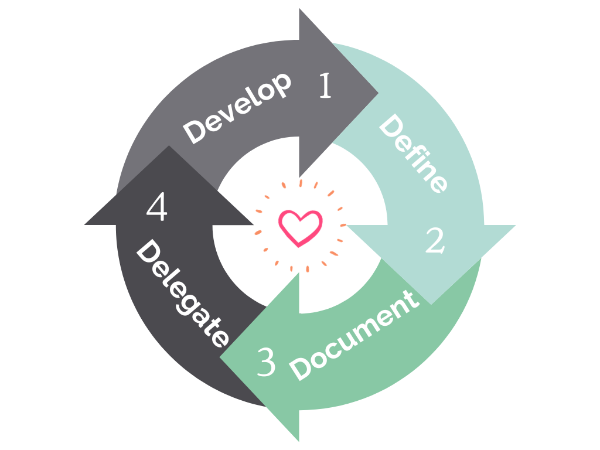
Where Procedures and Prompts Overlap
For anyone who wants to go a little deeper, below are the areas of overlap I see.
For reference, I’ve pulled the initial section headers directly from our own Standard Operating Procedure (SOP) template, and used an equals sign to show how they connect to prompt engineering.
Objectives = Goal/Task Description
The opening of any well-structured prompt answers exactly what the Objectives section of our SOP template answers: what does "done" look like, and why does this task exist?
What Is Needed to Complete = Context, Tools, and Prerequisites
Our SOP template details the information, knowledge, training, software, and equipment needed to complete the process.
A structured prompt needs the same: context must be provided, tools must be provisioned, and required inputs must be identified before the task can begin.
Policies = Constraints and Guardrails
The Policies section captures the rules and parameters within which a task must be performed–things like due dates, format requirements, and how to handle issues.
In a prompt, these become the hard constraints: always do X, never do Y, output must follow Z format.
FAQs = Edge Case Handling and Few-Shot Examples
The FAQs section captures the things that might trip someone up mid-task, like workarounds, exceptions, and "what if" moments.
In prompt engineering, this looks like providing example outputs and conditional instructions. Both serve the same purpose: preventing anyone (or anything) from getting stuck at predictable friction points.
Activities + Steps = Workflow Steps/Agentic Task Sequence
The Activity + Steps structure maps directly to how AI agent workflows are sequenced. You start with a major phase (Activity, and break it into discrete, executable actions (Steps).
Same Foundation, New Way of Delegating
AI doesn't require a new operational philosophy–it requires the one you ideally already have.
If you've been doing the hard work of defining and documenting your processes, you're not just ahead of the curve, you're already fluent in the language AI needs to actually do work for you.
And if you haven't started yet? There's no better time.
The investment you make in checklists and SOPs today is an investment that pays dividends. Whether you're delegating to a new hire, a seasoned team member, or an AI agent, the fundamentals don't change.